
World-building, explained
Why so many people get it wrong

Welcome to the Sociology of Business. In my last analysis, The legibility economy, I explained why legibility is a more valuable cultural currency than attention. If you are on the Substack, join the chat. With one of the paid subscription options, join Paid Membership Chat, and with the free subscription, join The General Chat on The Sociology of Business WhatsApp group.
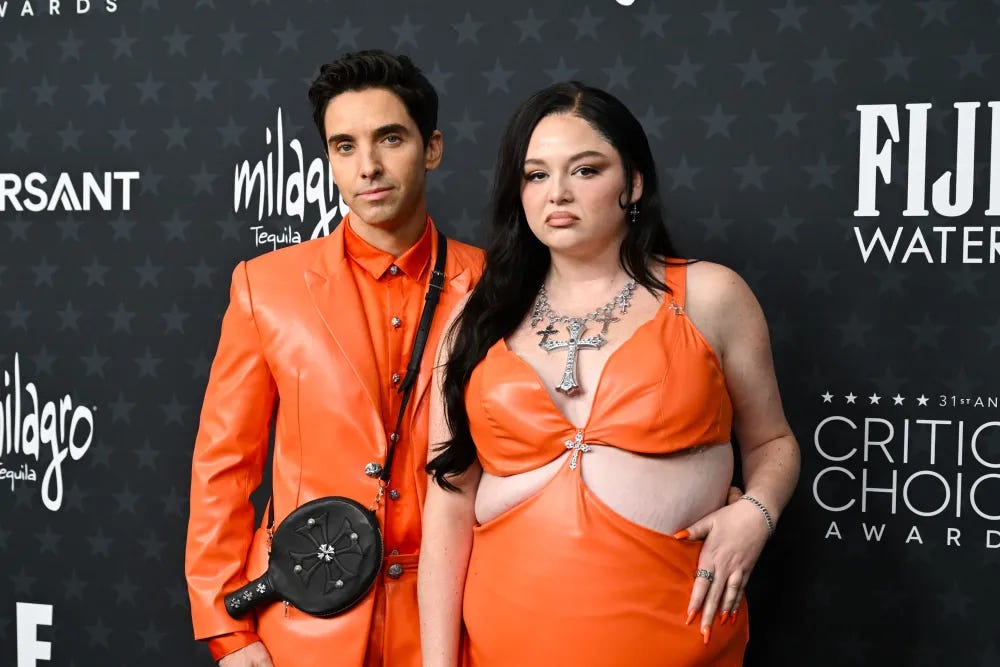
“What a ridiculous clusterfuck of totally uncool jokers.” - Barbara Kruger
I’ve felt the same after the month of Marty Supreme marketing. (The effort clearly paid off with the audience, with the opening weekend box office results being the second-best for A24. With critics, much less so, aside of Chalamet).
Is this the world of Marty Supreme or something else? And how to distinguish between the aesthetic and the logic of cultural output? Does it matter?
It does. When aesthetic eats logic, you get a stunt sold as a world. This is fine, except that it fools many a folk looking to replicate it for their own brands.
Aesthetic relates to perception by the senses, a set of principles concerned with the sensory feel of something—how it looks, sounds and feels. It focuses on perceptible things.
Logic is a structure of reasoning, a system of principles underlying the arrangements of elements. It focuses on the form of reasoning, not the topic.
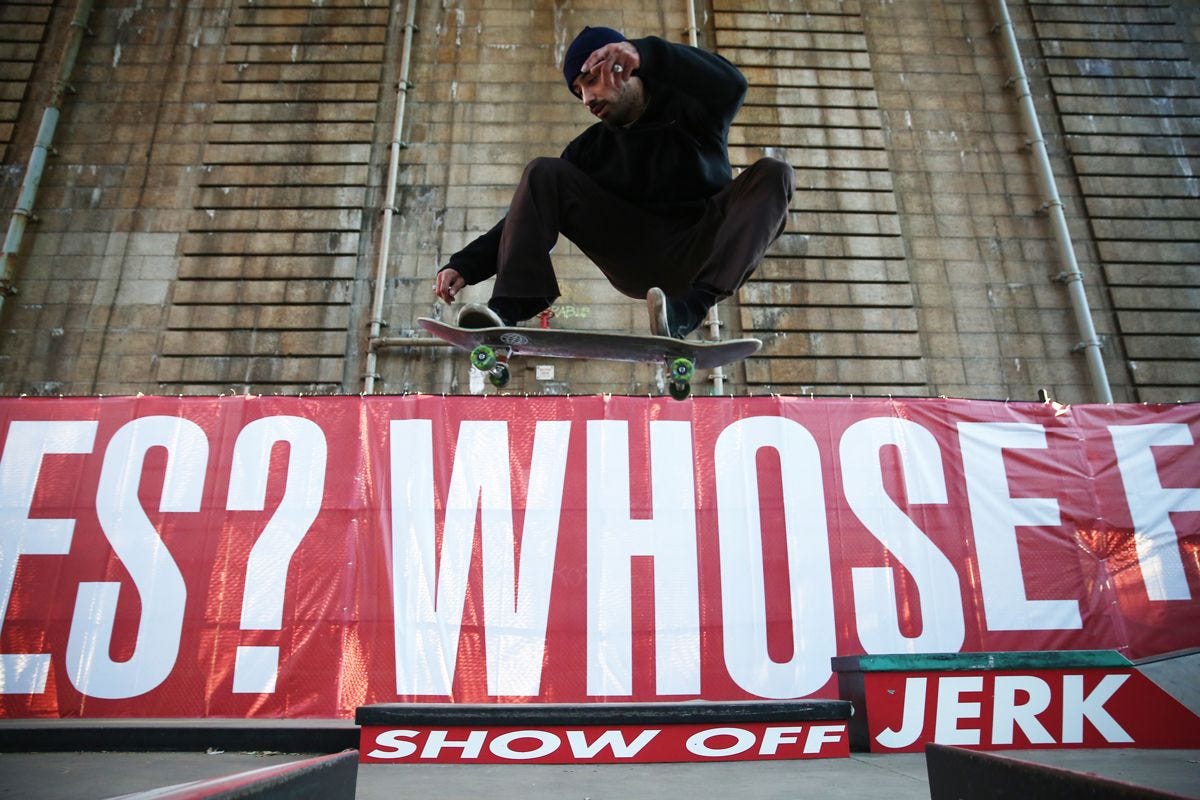
By focusing on aesthetics without logic, brands waste millions of dollars on stuff that is easily copied. In her recent essay, Gabriella Karefa-Johnson writes: “We’re deep in what I’m calling late-stage styling, where the dominant visual language is collapsed into brand codes instead of style codes. That manifests on the red carpet in theme dressing so literal and dull that it borders on a client-facing pitch deck. … Fashion on these carpets is ceasing to suggest character—it’s hitting us all over the head with marketing points. … Virality is no longer just the annoying but ultimately innocuous goal; it is the very raison d’être.” Focus is on spectacle, not its underlying engine.
This is hardly a surprising outcome. From the early days of streetwear, fashion took codes from art and subcultures and solid these codes back into culture as the “creative expression.” It has since been systematically turning sport, past, and entertainment into merch.
As marketing practice, “world-building” is both a buzzword and a necessity. Without mass attention, a movie trailer is rarely enough. A campaign has to have drops, cameos, stunts, characters, events—anything to make attention inevitable. If Marty Supreme ran only trailers, it might have had ended up as The Smashing Machine.
Cultural currency, another buzzword that means the ability to influence consumer attention, is made by shock tactics taken from streetwear (aka art and subcultures). Put Timothée on the top of Las Vegas Sphere, dress him in orange, do a drop of Marty Supreme Wheaties, give your famous friends Marty Supreme jackets.
We’ve seen all this before. Christo installed orange gates in Central Park, FUCT gave
Finish reading by upgrading your subscription—there is more about types of worlds, brands that do it well, and 3 characteristics of that all brand worlds share.
